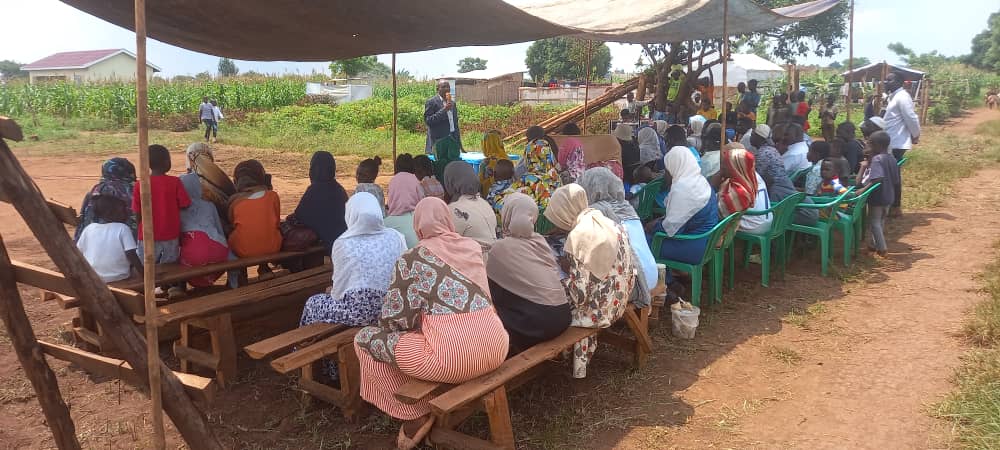

For decades, Uganda has been recognized for maintaining one of the most progressive refugee policies in the world. Today, that commitment is being tested again as thousands of people fleeing war in Sudan continue to cross into Uganda seeking safety, stability, and hope for a better future.
The ongoing conflict in Sudan, which erupted in April 2023 between the Sudanese Armed Forces (SAF) and the Rapid Support Forces (RSF), has evolved into one of the world’s largest displacement crises. Millions have been forced from their homes, while neighboring countries like Uganda are carrying an increasing humanitarian burden. (The United Nations Office at Geneva)

Uganda’s Open-Door Refugee Policy Under Pressure
Uganda currently hosts more than 1.7 million refugees and asylum seekers, making it the largest refugee-hosting country in Africa. The country continues to receive new arrivals from Sudan, alongside refugees from South Sudan and the Democratic Republic of Congo. (UNHCR)
According to recent UNHCR data, more than 82,000 Sudanese refugees and asylum seekers are now registered in Uganda, with many settled in areas such as Kiryandongo Refugee Settlement. (UNHCR)
Unlike many countries that place refugees in isolated camps with limited movement, Uganda allows refugees to work, move freely, access education, and integrate into local communities. This policy has often been praised internationally as a model for refugee inclusion. However, the growing number of arrivals is placing serious pressure on already limited resources. (UNHCR)
The Human Reality Behind the Numbers
Behind every statistic is a human story.
Many Sudanese refugees arriving in Uganda have escaped unimaginable violence, hunger, and loss. Families have traveled across multiple borders with little more than the clothes they were wearing. Some arrive after weeks of uncertainty, carrying trauma from bombings, displacement, and separation from loved ones.
Reports from humanitarian agencies describe worsening food insecurity inside Sudan, with millions surviving on just one meal a day. In some regions, civilians are reportedly resorting to eating leaves and animal feed to survive. (Reuters)
For those who make it to Uganda, safety is only the beginning of another difficult journey. Refugee settlements are overcrowded, humanitarian funding is shrinking, and essential services such as healthcare, nutrition programs, and education are struggling to keep up with demand. (The United Nations Office at Geneva)
In Kiryandongo settlement, where many Sudanese refugees are being hosted, aid agencies have warned that clinic closures and interruptions in nutrition support are putting vulnerable families at greater risk of disease and malnutrition. (The United Nations Office at Geneva)
A Crisis Compounded by Global Funding Cuts
One of the biggest challenges facing the refugee response today is not only the scale of displacement, but also declining international attention and humanitarian funding.
The United Nations and humanitarian partners launched a $1.6 billion regional appeal in 2026 to support refugees fleeing Sudan across seven neighboring countries, including Uganda. Yet humanitarian agencies continue to warn that available resources are falling far short of growing needs. (The United Nations Office at Geneva)
As global crises compete for attention, Sudan risks becoming what many humanitarian experts describe as a “forgotten crisis.” Despite being one of the world’s worst humanitarian disasters, international media coverage and donor support have not matched the scale of suffering on the ground. (The Washington Post)
This funding gap has direct consequences. Reduced food assistance, strained medical services, overcrowded schools, and limited livelihood opportunities all affect refugees trying to rebuild their lives in Uganda.
Resilience Amid Uncertainty
Despite the hardships, many Sudanese refugees continue to show remarkable resilience.
Across refugee settlements in Uganda, families are starting small businesses, enrolling children in schools, and rebuilding community networks. Some refugees are using skills in tailoring, teaching, technology, and trade to support themselves and contribute to host communities. (The United Nations Office at Geneva)
Ugandan communities themselves have also demonstrated extraordinary generosity by sharing land, services, and opportunities with displaced populations. However, without stronger international support, both refugees and host communities may face increasing hardship in the years ahead.
Why the World Should Care
The Sudan refugee crisis is not just a regional issue — it is a global humanitarian responsibility.
The future of millions of displaced Sudanese families depends on sustained humanitarian assistance, stronger diplomatic efforts toward peace in Sudan, and long-term investment in refugee-hosting countries like Uganda.
Ignoring the crisis risks creating deeper instability, prolonged suffering, and lost generations of children growing up without proper education, healthcare, or opportunity.
At the same time, Uganda’s response offers an important lesson: compassion and inclusion remain possible even under difficult circumstances. The challenge now is ensuring that this generosity is matched with meaningful international support.
Final Thoughts
The story of Sudanese refugees in Uganda is ultimately a story of survival, resilience, and human dignity in the face of extraordinary adversity.
While headlines may shift elsewhere, the realities facing displaced Sudanese families remain urgent and deeply human. Continued awareness, advocacy, and support are essential if refugees are to move beyond survival and toward rebuilding their lives with dignity and hope.
For Uganda, the burden is heavy — but so too is its example to the world. (UNHCR)